The rulebook, three pillars, and a home: how the integrity stack works
Why we built independent ratings and risk assessment into every credit — so each one can tell a true story.

The rulebook, three pillars, and a home: how the integrity stack works
Every carbon credit is a claim about a tonne of CO₂ — that somewhere, a tonne was kept out of the atmosphere or drawn back down from it. The whole market rests on whether you can trust that claim.
In the past that trust has rested on validation and verification: independent, accredited bodies checking that a project is what it says it is. That work is essential, and it isn't going anywhere. But we believe a credit can tell an even fuller story. So rather than replace that foundation, we wanted to build on top of it — adding independent, standardised views of quality and risk that sit alongside verification and give buyers more to work with. That's what the integrity stack is: not one gatekeeper doing one check, but several distinct jobs, done by different, independent parties.
It starts with a rulebook, adds three independent pillars on top, and lives in one shared home. iCR is the first and only registry to integrate third-party ratings and risk assessment directly into its program requirements.
The rulebook: iCR Program requirements
Everything starts with the rules. The iCR Program requirements define what actually qualifies — what's eligible, how impact is quantified, which methodologies apply, and the quality controls that hold every project to the same bar. Without a rulebook, "high quality" is just an opinion. This is the foundation the rest of the stack builds on.
iCR's requirements are public and well documented — you can visit the documentation home here.
Three independent pillars stack on top
On top of the rulebook stand three independent assessments — each carried out by a different party, each answering a different question.
Verification — did it really happen? Accredited Validation and Verification Bodies (ISO 14065) confirm each project at project level: is it designed correctly, and did it deliver what it claims? This is the market's long-established pillar. The newer layers stand alongside it — they add to verification, they don't replace it.
Learn about validation and verification:
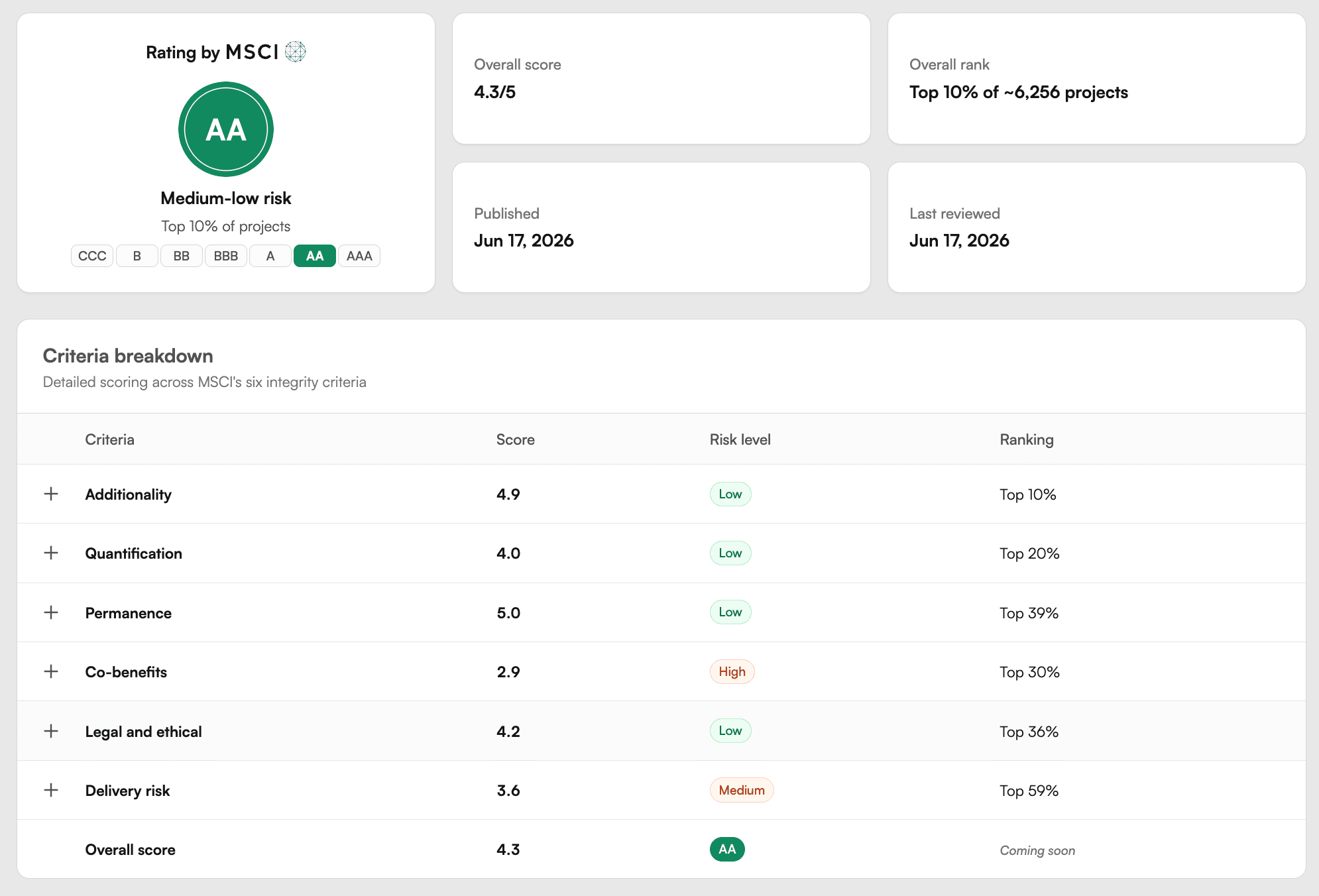
Rating — how does it compare? An independent MSCI Carbon Project Rating gives a rules-based, capital-markets-grade view that compares each project against others. A rating doesn't tell you what to buy; it tells you what you're buying. Like a grade on food or a rating on a bond, every grade has a use case and a price — some buyers need the prime cut, others just need to know it isn't mystery meat. Both are valid.
Example of a rating display
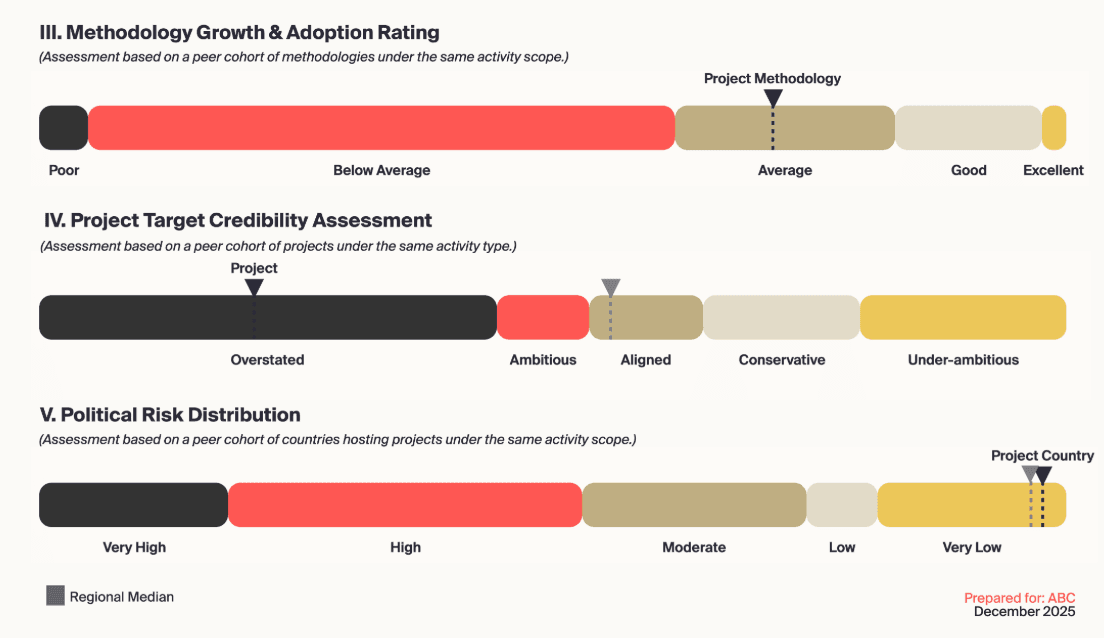
Risk — what could still go wrong? A Kita risk assessment gives a financial-grade view of forward-looking risk — delivery, performance, and permanence — with insurance able to stand behind it if a buyer wants it. The insurance is optional; the assessment isn't.
The registry: a digital home and a single source of truth
All of this needs somewhere to live. The iCR Registry is that home, at carbonregistry.com — issuance, transfer, retirement, traceability, and full lifecycle data in one place. It's the single source of truth that tracks every credit, makes double counting impossible, and gives the community of projects and participants a shared home. It's also an innovator: iCR was the first registry to implement a public blockchain. The registry currently hosts the iCR Program as well as the Forest Carbon Code in Iceland — and it's open to other standards too.
Why it holds together
The point isn't just that these jobs get done — it's that different, independent parties do them. iCR sets the rules and runs the registry. VVBs verify. MSCI rates. Kita assesses. Nobody grades their own homework, so each pillar is a real check on the others. Some factors overlap and others are unique to a single assessment, so each approach offers a different perspective — together they help surface both a project's strengths and its areas for improvement.
That independence is what turns a credit from an assertion into something you can actually interrogate. And it's why we now embed MSCI ratings and Kita risk assessment on every registered project by default — adding two independent pillars on top of verification, without replacing anything already there.
Because a credit is only worth what its story can withstand. And a true story needs the rulebook, the pillars, and the home all doing their job — each in independent hands.